
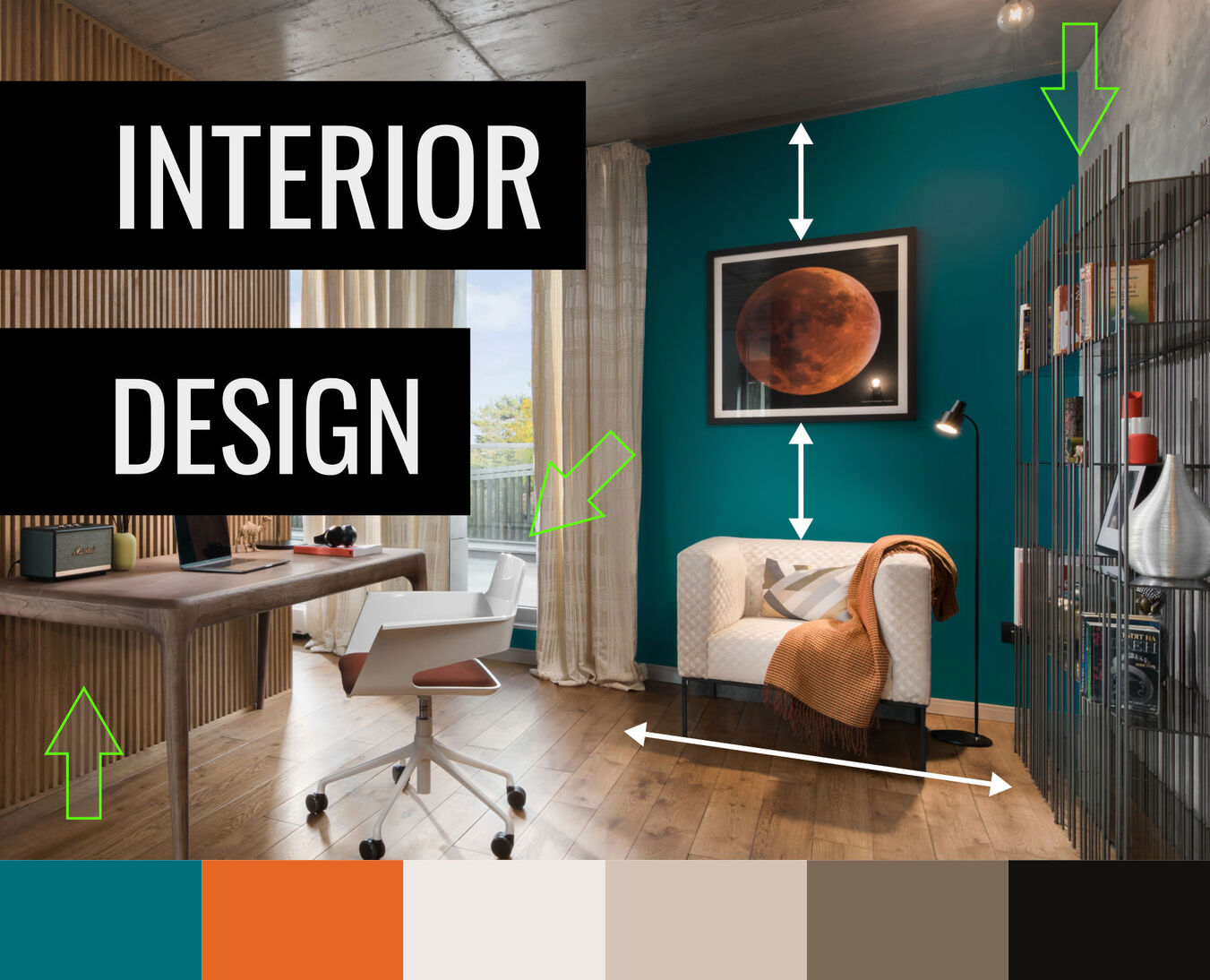
Interior design organises space as both a functional system and a visual composition. The emphasis may shift according to the room’s purpose and its occupants’ needs, but neither aspect exists in isolation. A considered solution finds the right measure between practical logic and aesthetic coherence.

What Is Interior Design?
Interior design extends beyond selecting and arranging furniture. It creates a clear relationship between space, function, and the elements within it through principles of proportion, rhythm, light, and colour.
The layout follows the way the space will be used. Furniture, form, colour, and texture build on that foundation and define its character. When these decisions form a single composition, the interior remains both functional and distinctive.
Relationships Between Elements
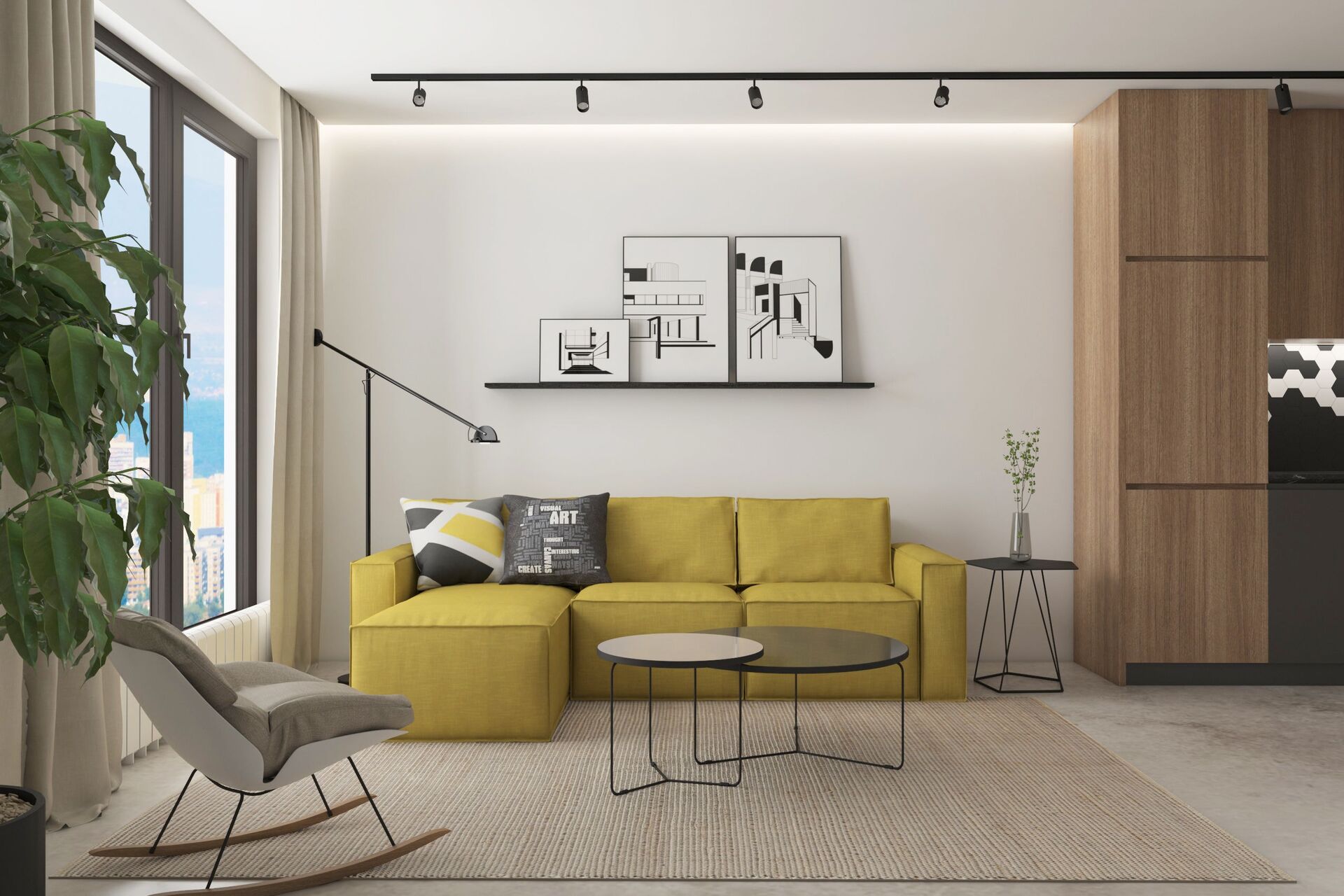
The quality of an interior composition depends not only on its individual elements, but also on the relationships between them. Scale, form, colour, and texture should read as parts of a whole.
The starting point is the space itself—its proportions and its horizontal, vertical, or diagonal lines. Form, colour, texture, themes, and motifs add the next layer. Natural and artificial light connect these elements and alter how they are perceived.

The amount and direction of daylight are fundamental design conditions. They inform the choice of light or dark tones and affect how warm and cool colours are perceived.
Colour and Light
Colour is always perceived through light. Direct and indirect daylight alter its saturation, temperature, and depth. The palette should therefore respond to the actual lighting conditions: the right relationship can strengthen the intended tone, while the wrong one can distort it.
Where daylight is limited, the colour scheme and artificial lighting should be designed together. The quantity and colour temperature of the light should respond to the proportions of the space and the activities it supports.
A colour palette may be soft and muted or contrasting and saturated. What matters is not its intensity, but its consistent application—with an understanding of each colour, the relationships between colours, and their effect on the space.
Colour affects the character and perception of a room. Choices for a bedroom, child’s room, restaurant, or office should therefore respond to its specific function, scale, and light rather than to a universal formula.
Principles of Composition
Individual elements gain meaning through the principles that connect them. Proportion, balance, rhythm, and emphasis give structure to the composition and make the space legible.
These principles are not dogma. They may be deliberately broken when a project calls for a specific effect, but such a decision requires a clear understanding of the rule and its purpose.
Balance depends on the relationship between size, form, colour, and open space. When furniture and objects are out of scale with the room or with one another, the composition becomes visually heavy and circulation loses clarity.
Proportion is especially visible in small spaces. Objects should suit both the dimensions of the room and one another. The right scale keeps function and visual order clear even where space is limited.
The repetition of lines, forms, or colours creates rhythm. It need not be literal: a clear visual relationship is enough to guide the eye and connect the different parts of the space.
Proportion and rhythm work together. The first organises visual weight; the second connects different zones and supports a natural reading of the space.
An accent directs attention and establishes hierarchy. In a monochrome or restrained interior, it may be a form, colour, texture, or object. Its role is not to dominate, but to give the composition focus and character.
A coherent interior emerges when function, proportion, light, colour, rhythm, and emphasis work as one system. The individual decisions then support rather than compete with one another, reinforcing both the architecture and the way the space is used.


